Table of Contents
A multinational tech company launches a new app in five languages. Weeks later, customer support is flooded with complaints. The instructions in one country read like scrambled code. Sales stall. Refunds spike. All because a machine translation missed the subtle meaning of a single word.
Clear communication is the backbone of global business. A minor mistranslation can undermine trust, delay projects, or drive away customers. Deciding between machine and human translation is a business risk calculation.
This guide lays out when you should trust automation, when you need human expertise, and how to keep your message sharp in any language.
Translation Today: Two Paths, One Goal
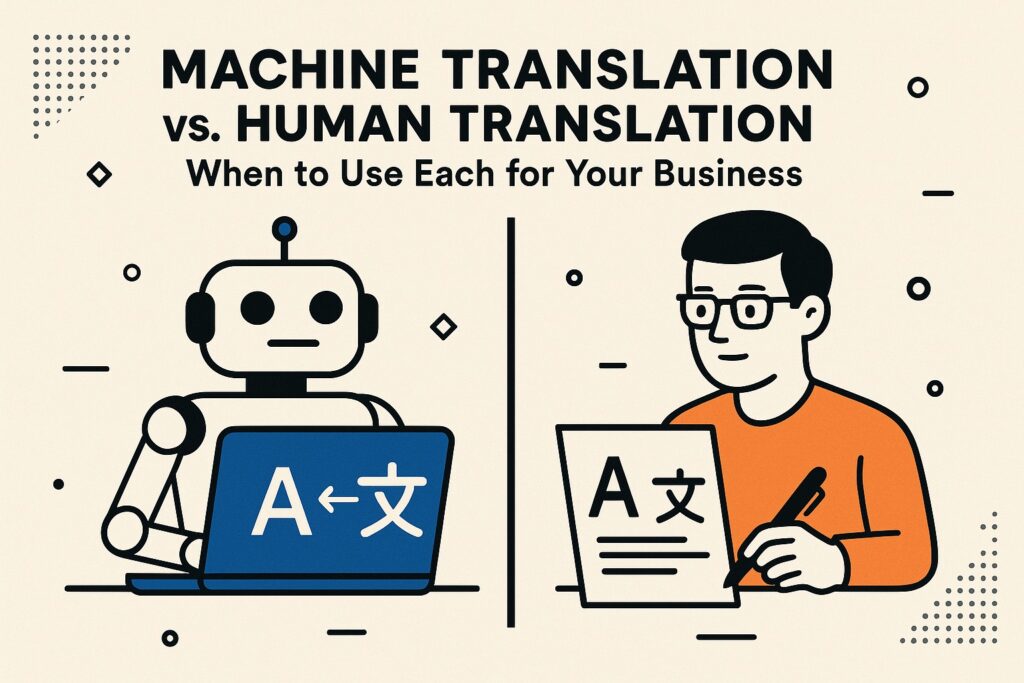
Every day, businesses rely on translation to reach new markets, serve customers, and support teams across borders. But not all translations are created equal. You have two main options:
Machine Translation (MT) means using artificial intelligence—systems like Google Translate or DeepL—to turn text from one language to another in seconds. MT is built for speed and volume.
Human Translation (HT) uses skilled linguists. These professionals understand not just words, but the context, culture, and subject matter behind them. HT brings human insight to every line.
Both approaches share a common goal: help people understand each other, no matter what language they speak. But each method offers different strengths, and choosing the right one matters for your business.
People and Productivity: Getting the Message Across Clearly
Machine Translation: Speed and Scale
Machine translation turns mountains of text into dozens of languages in moments. If you need to translate technical manuals, product catalogs, or large volumes of internal emails, MT handles the load without delay. It’s built for high-speed projects where understanding the gist is enough. For many companies, this means faster launches, quicker training, and more agile teams.
Human Translation: Accuracy and Impact
When your words shape decisions, perception, or legal obligations, you need more than speed. Human translators bring a depth of understanding no machine can match. They catch double meanings, tone, and cultural cues that shape a message’s impact. This is critical for customer-facing materials, legal agreements, or anything tied to your brand. In fact, 80% of buyers say they’re more likely to trust brands that communicate in a natural, native voice.
Cost Considerations: Finding Value, Not Just Savings
Machine Translation: Low Cost, Limited Customization
Machine translation keeps expenses lean. You pay a fraction of what human services cost, often just a few cents per word. For high-volume projects with lower stakes—such as internal reports or basic product descriptions—MT offers budget relief without long wait times. The trade-off: less control over style, accuracy, and nuance.
Human Translation: Higher Cost, Higher Stakes
Human translation is an investment. Fees run higher, but the cost covers more than just word-for-word swaps. It buys accuracy, cultural insight, and risk reduction. When errors could mean legal challenges or brand damage, these services pay for themselves. A contract translated by a specialist might cost more now but shields your business from far greater losses down the road.
Choosing the Right Tool for Each Job
Every translation project comes with its own demands. The key is matching the method to the risk and reach of your message.
Use machine translation when:
You have large volumes of repetitive or routine content.
The audience is internal, not public-facing.
You need quick drafts to speed up review cycles or internal decision-making.
Use human translation when:
The message faces customers, partners, or regulators.
The subject matter is legal, medical, or highly technical.
Your brand reputation or contractual obligations are on the line.
—
Are you ready to get started with your higher-stake translation project in need of an accurate human translator? Contact us to get started.